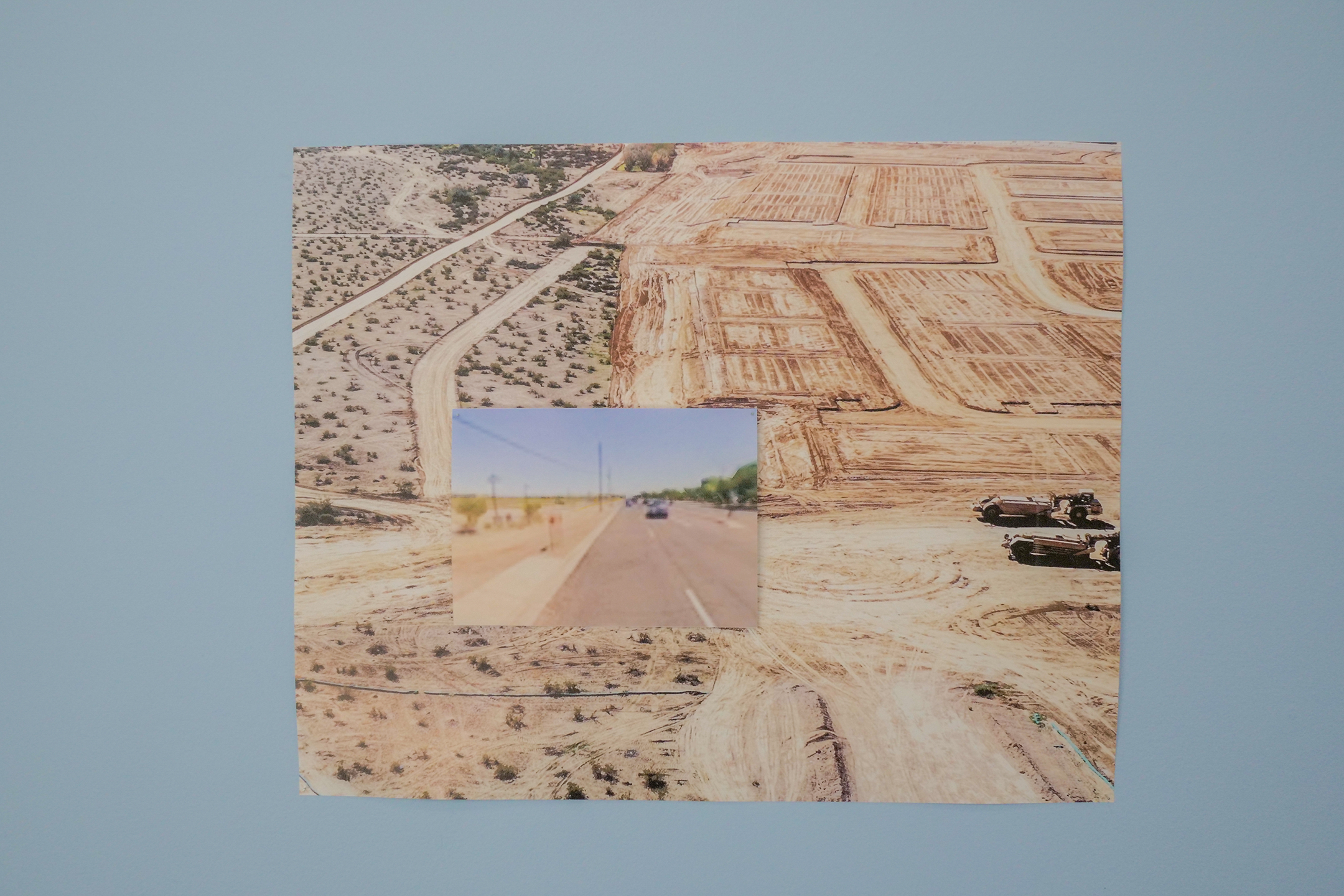
CAPTON: “alejandro t. acierto: Model Home” will open on September 26 at Scottsdale Museum of Contemporary Art (SMoCA). “untitled assemblage” from the “uninvited guests” series by alejandro t. acierto will be among the featured artworks.
SCOTTSDALE, Ariz. — Scottsdale Museum of Contemporary Art (SMoCA) presents “alejandro t. acierto: Model Home,” an installation-based exhibition that highlights public consciousness around the environment, opening on September 26.
“Model Home” examines recent changes to the broader desert landscape, driven by increased development and population growth in the Phoenix metro area. The exhibition highlights how the land and the local flora and fauna have been impacted by new settlements, urban expansion and climate change.
Curated by Julie Ganas, curator of engagement and digital initiatives, and Oliver Sayers, SMoCA coordinator, “Model Home” is especially relevant after witnessing the effects of expansion, including water waste and harm to conservation efforts.
“The ecological impact of urban expansion within the desert is having a deep impact on the landscape,” Sayers said. “Living in Phoenix, it's impossible to ignore the region's rapid growth. As development expands, it raises questions about the strain on the desert's limited resources and how such transformation will reshape its ecosystem over time.”
Through video, audio, photography, surface scans and found objects, artist alejandro t. acierto asks the viewer to define the value of land that is perceived as vacant or unoccupied. It also becomes a larger conversation about who’s being dispossessed, who's being displaced, the histories and legacies of displacement and what is at stake in the desire to bring more people in.
Since the federal government established the new Arizona Territory in 1863, groups of people have been migrating to call Arizona home, and between 1950 and 1960, Phoenix experienced massive growth in its built environment. In that decade, the city’s population quadrupled to 439,000 as its land area soared from 17 to 190 square miles.
“This exhibition has become a convenient way to bring in all of these conversations around displacement, water shortages and the water crisis, the alarming amount of unhoused people that live in the Valley and its own set of concerns that unfold into other social problems,” acierto said. “This has to do with me questioning how this might unfold and trying to ignite a conversation around what we do in this moment of precarity.”
“Model Home” will include a large-scale model home inside the gallery, a library component inside the museum’s _____ (blank) space area and a short documentary with acietro’s footage of a landscape in Buckeye that is being redefined by a new development.
Ganas explained that since “Model Home” is an installation, it has a way of immersing the viewer in a space that feels familiar while inside a museum, allowing for critical thought and awareness.
“I'm always hopeful that people will bring their own life experiences to that and find things they relate to in the art,” Ganas said. “It’ll give those who visit an opportunity to meander through what could have been a model home and spatially understand their relationship to this structure.”
The main throughline of the exhibition is public consciousness around the environment. acierto noted that art is a great way to initiate a conversation, consolidate information and provide viewers and audiences with a different sensorial experience. It is intrinsic to all artistic practices to offer a different point of access to the stories that emerge from larger conceptual concerns.
“I mainly want audiences to feel the space," acierto said. “I want them to feel the things that are at stake. I don’t necessarily have all the answers, but I want to open that conversation for folks to understand that these are the conditions and maybe reorient their thinking. I want you to sit with the art and figure out how to deal with it in conversation, in community with other people.”
“alejandro t. acierto: Model Home” is organized by Scottsdale Museum of Contemporary Art (SMoCA) and curated by Julie Ganas, curator of engagement and digital initiatives, and Oliver Sayers, SMoCA coordinator. In addition to the exhibition itself, SMoCA will be hosting its Fall Opening Celebration from 7 to 9 p.m. on Sept. 25, 2026, at Scottsdale Museum of Contemporary Art.
SMoCA — named “Best Art Museum” in the Best of Phoenix awards — is located at 7374 E. Second St., Scottsdale, Arizona 85251. It is open Wednesdays, Fridays, Saturdays and Sundays, 11 a.m. to 5 p.m., and on Thursdays, 11 a.m. to 7 p.m. Visit SMoCA.org for information.
Admission is $16 for non-members; $13 for students, seniors (65+) and veterans; and free for Scottsdale Arts ONE Members, healthcare workers, first responders, and patrons 18 and younger. Admission to the museum is pay-what-you-wish every Thursday and every second Saturday of the month.
MEDIA CONTACT: Sydney Ritter | SydneyR@ScottsdaleArts.org | 480-874-4663