First settled in 1888, Scottsdale has flourished through the years in myriad ways, including its support of the fine arts. Scottsdale Center for the Arts, now known as Scottsdale Center for the Performing Arts, opened on October 23, 1975, and has remained an integral part of the city's identity for half a century.
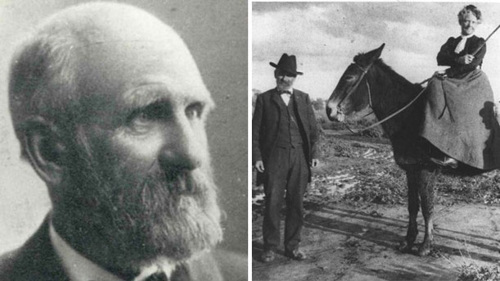
Scottsdale began to expand as a successful agricultural community. In 1896, a general store and post office opened, and in 1897, a commercial inn opened to support the increase in residents. By 1911, it was estimated that more than 100 people lived in Scottsdale.
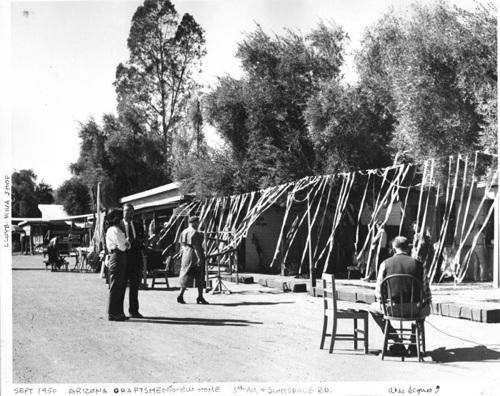
By the 1930s, the population was approximately 2,700, and by the end of World War II, Scottsdale was rebranding itself as a community focused on supporting local businesses, tourism, and artistry. In 1946, Scottsdale artists and craftsmen turned a former general store into the Arizona Craftsman Center, which earned the attention of notable fashion designers, artists, and photographers. One of the most prominent names to visit the Arizona Craftsman Center was former First Lady Eleanor Roosevelt, who wrote about her experience in her newspaper column.
In 1954, the city began to secure land around Indian School Road for a future community center. In 1963, Paul Huldermann, a leader in the arts and gallery communities, wrote an editorial in the Scottsdale Daily Progress in support of creating a community center focused on the arts. And in 1967, the Scottsdale City Council appointed a Fine Arts Commission.
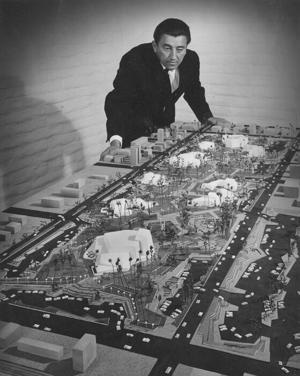
In 1971, the first Scottsdale Arts Festival was held in various locations throughout the city. And in 1972, the Civic Center Mall Amphitheater was dedicated.
Though the city had begun to acquire a fine art collection in 1967, with the appointment of the Fine Arts Commission, the city commissioned its first large-scale public artwork in 1973: Louise Nevelson's iconic Windows to the West. This sculpture at the Civic Center began the Scottsdale Public Art Permanent Collection.
But the city had one more project to add to Civic Center Mall in the 1970s. Next on Gonzales's list was a new center for the arts.
Part 2 of this series will detail the construction of Scottsdale Center for the Arts and the new venue's early days.