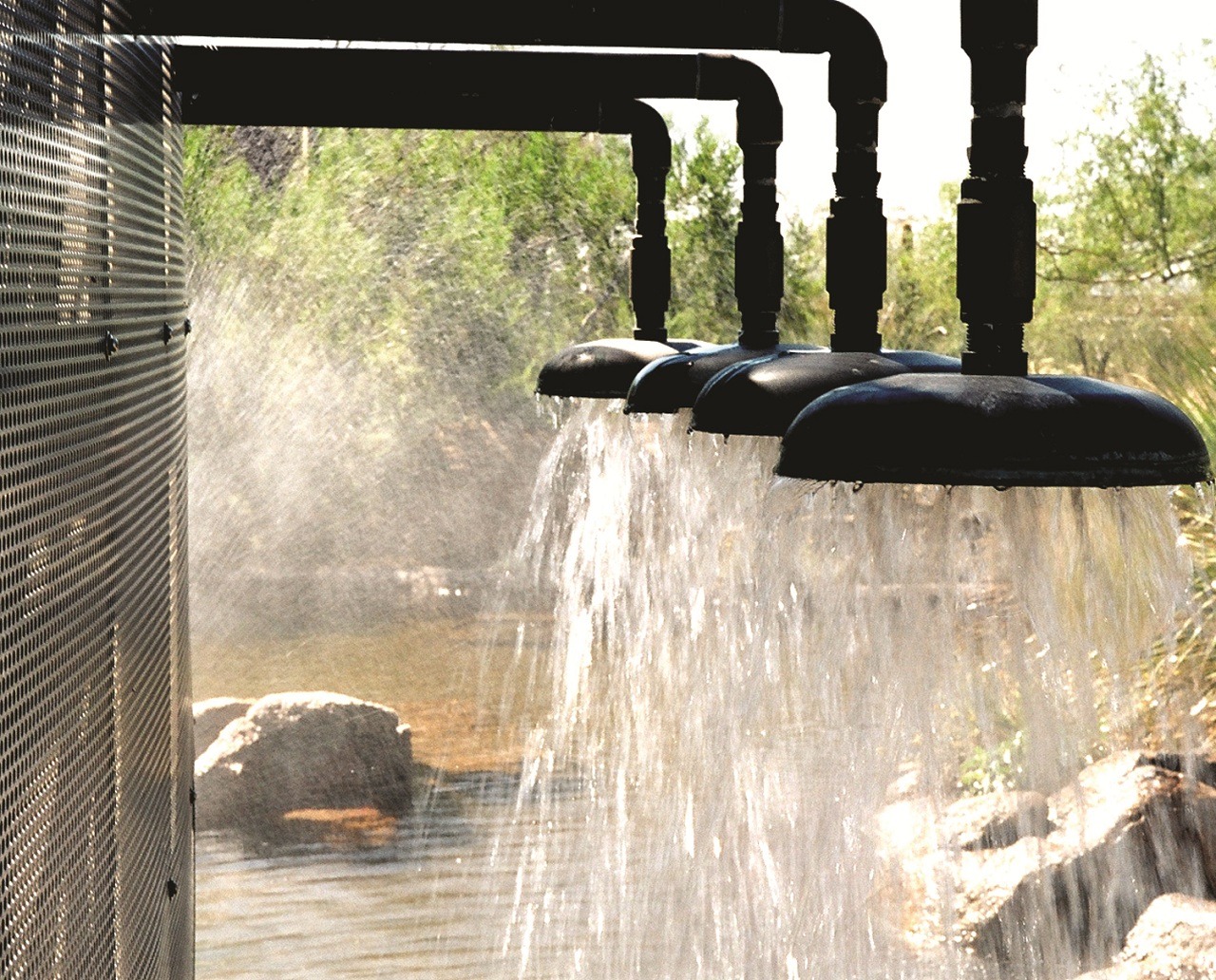
Using only a small amount of water, the sculpture gives people a variegated experience of water, letting them walk over it on an open grating and through it as it travels in the pipes, letting them hear the sound of it falling and see it splashing in a variety of patterns. Light plays off the stream onto the reflective surface of the wall. The filigree of its perforated-metal skin and uni-strut skeleton creates interesting shadow patterns on the water. The garden surrounding the wall includes numerous cacti. The special features of these extraordinary plants are adaptations to the excessively dry climate in which they exist. The shapes of the cactus, their ubiquitous needles, the sticky coating on creosote, the tiny leaves of the Palo Verde and the here-today-gone-tomorrow leaves of the ocotillo, all are ways of achieving one goal: to conserve water.
Edwards is a licensed architect with a bachelor’s degree from University of Arizona. In 1990 he received the Concrete Reinforcing Steel Institute (CSRI) Design Award. Artist, author and psychologist, Christine Tanz earned her doctorate and master’s degrees in psychology from the University of Chicago. Her bachelors in history and literature is from Harvard University. Edwards and Tanz are both residents of Tucson, where they have been active members of the public art and design community. Both were instrumental in stimulating recognition of Tucson ‘s mural legacy in by writing Art Plan for Metropolitan Tucson.
Location: 8787 East Hualapai Drive, Scottsdale, AZ, USA
Artist: Christine Tanz and Paul Edwards (1954–2007)
Dates: Completed 1999